Singapore life · Bilingual edition
Dachshund in Chinese: 腊肠犬 Explained
腊肠犬: the waxed-sausage dog, which means English and Chinese independently looked at this breed and named it lunch. Here is the name in three languages, the Singapore usage patterns, and the bilingual phrasebook this breed's back makes genuinely useful.
Nelson and Kim, Curious Tails · AVS licence AS24J00046
What is Dachshund in Chinese?
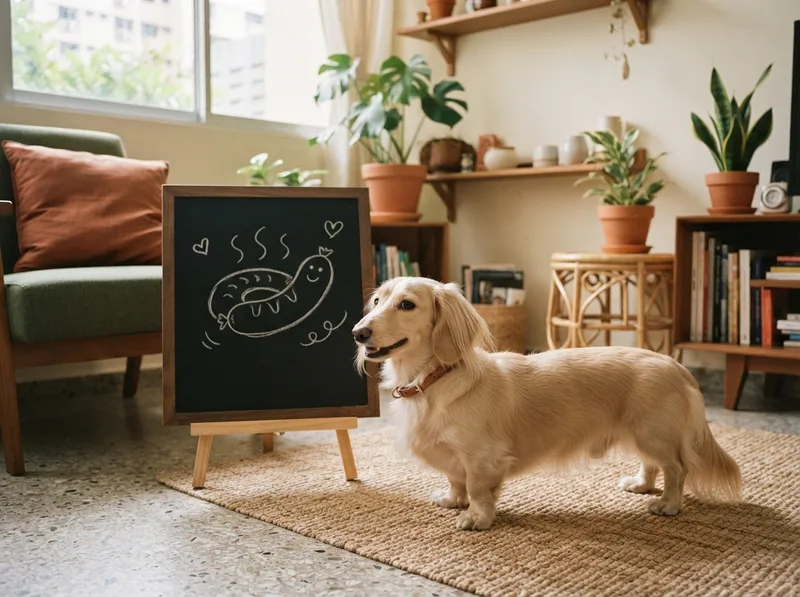
Dachshund in Chinese is 腊肠犬 (là cháng quǎn): 腊肠 is the Chinese waxed sausage and 犬 the formal word for dog, so the name literally means sausage dog, exactly like the English nickname. Everyday speech often softens it to 腊肠狗 (la chang gou), and the Miniature on Singapore licences is 迷你腊肠犬. The German original, meanwhile, means badger dog: the job, not the lunch.
One dog, three languages, one sausage
The dachshund in chinese translation is 腊肠犬, la chang quan, and among chinese dog breed names it is a rare piece of international consensus: 腊肠 (la chang) is the Chinese waxed sausage hanging in every Chinatown provision shop, and 犬 (quan) is the formal word for dog. The sausage dog chinese name, like the English nickname, looked at the silhouette and called it lunch.
The German original went a different way, and the dachshund meaning surprises people: badger dog german style, from Dachs (badger) and Hund (dog), the name origins pointing at the job rather than the shape, as the temperament page explains at length. So the dog carries a résumé in German, a menu item in English and Chinese, and answers to all of them provided a treat is involved.
On the last character: 犬 vs 狗. Both mean dog; 犬 (quan) is the formal, literary register used in breed names and official contexts, while 狗 (gou) is everyday speech. So the breed book says 腊肠犬, and the auntie at the void deck says 腊肠狗, and both are correct, the way "canine" and "doggy" coexist in English.
The name in three languages
- 腊肠犬 (la chang quan): waxed-sausage dog, formal
- 腊肠狗 (la chang gou): the everyday spoken version
- Dachshund (German): badger dog, the job title
- Sausage dog, wiener dog (English): the menu again
- One dog, answering to all of it, for treats
How to pronounce 腊肠犬
For non-Mandarin-speaking owners who want the name to survive contact with a Chinese-speaking vet, groomer or in-law: là cháng quǎn. The chinese characters dog owners meet on clinic forms follow the same word, and syllable by syllable it runs: "la" with a falling tone (like a decisive "lah", fittingly), "chang" rising (chahng), "quan" with a dipping tone (chwen, roughly). Say it three times at the clinic counter and you have earned the approving nod.
Going the other direction, Mandarin-first speakers meeting the German word: DAKS-hund covers it in Singapore English, and the pronunciation guide next door handles the full story. The practical point of this bilingual round-trip: Singapore’s pet ecosystem runs in both languages, clinic forms and microchip records usually carry the English breed name, chatty consultations often run in Mandarin, and an owner fluent in both names navigates everything smoothly.
The vet and groomer phrasebook
The genuinely useful part for bilingual pet owner households, or English-speaking owners with Mandarin-preferring service providers: a pet phrasebook of mandarin dog terms for the vet visit chinese speakers run, the groomer chinese counters use, and the conversations this breed actually generates. Breed identity first: 我的狗是腊肠犬 (wo de gou shi la chang quan): my dog is a Dachshund; 迷你腊肠犬 (mi ni la chang quan): Miniature Dachshund, the version on our cards.
The health vocabulary this breed makes essential: 背 (bei): back; 脊椎 (ji zhui): spine; 它的背受伤了 (ta de bei shou shang le): its back is injured, the sentence you hope never to need at an emergency counter; 后腿无力 (hou tui wu li): hind legs weak, the run-now sign from the IVDD guide, bilingually loaded. Grooming counter: 长毛 (chang mao): long-haired; 剪指甲 (jian zhi jia): trim nails; 不要剃毛 (bu yao ti mao): do not shave the coat, the phrase that protects the sunshield in any language.
The five phrases worth memorising
- 迷你腊肠犬: Miniature Dachshund (the breed on your licence)
- 它的背受伤了: its back is injured (emergency counter)
- 后腿无力: hind legs weak (the run-now sign)
- 不要剃毛: do not shave the coat (grooming counter)
- 剪指甲: nail trim, please
The name in Singapore usage
In practice, singapore bilingual habits code-switch the breed name the way they code-switch everything: listings and vet records run English, family WhatsApp groups run 腊肠狗 with sausage emojis, and the void deck conversation lands wherever the aunties do. The 70-per-month search volume for 腊肠犬 locally says a real slice of the market researches the breed in Chinese first, which is precisely why this page exists.
For multigenerational households, the bilingual name carries practical weight: the grandparents who will share the flat with this dog deserve the introduction in their preferred language, including the honest parts, the bark, the back rules, the two-hand carry, which translate perfectly well. A dog that the whole household can discuss is a dog the whole household protects, in whichever language the reminder about the sofa ramp gets shouted.
The Chinese name looked at the silhouette and called it lunch.
Beyond Mandarin: the name collection
Completing the collection for the curious: Cantonese-speaking households render it 腊肠狗 with Cantonese pronunciation (laap coeng gau); Hokkien conversation borrows freely per family habit; and the German community here still says Dackel, the affectionate short form, or Teckel, the hunting-line name that FCI paperwork preserves. Every one of them is the same low, loud, devoted comedian described on the temperament page.
And if the multilingual naming rabbit hole delighted you, the companion piece next door, how to say Dachshund, settles the English-side arguments, from DAKS-hund to why "dash hound" makes breed clubs twitch. Whichever name your household lands on, the licensing paperwork will say Dachshund (Miniature), and the dog will answer, as ever, to the sound of the treat jar.
Frequently asked questions
What is Dachshund in Chinese?
腊肠犬 (la chang quan), literally waxed-sausage dog: 腊肠 is the Chinese sausage, 犬 the formal word for dog. Everyday speech often uses 腊肠狗 (la chang gou).
How do you pronounce 腊肠犬?
Là cháng quǎn: "la" falling, "chang" rising, "quan" dipping (roughly la-chahng-chwen). Three repetitions at the clinic counter earns the approving nod.
Why is it named after sausage in both languages?
Convergent evolution of the obvious joke: English and Chinese both named the silhouette. Only the German original names the job: Dachshund means badger dog.
犬 or 狗: which should I use?
Both are correct: 犬 is the formal register used in breed names and paperwork, 狗 the everyday word. Breed book says 腊肠犬; the void deck says 腊肠狗.
What phrases help at a Chinese-speaking vet?
The back set: 背 (back), 脊椎 (spine), 它的背受伤了 (its back is injured), 后腿无力 (hind legs weak). This breed makes the spine vocabulary the essential module.
What do other languages call the breed?
German: Dackel or Teckel affectionately; Cantonese: 腊肠狗 (laap coeng gau); English: sausage dog, wiener dog, doxie. Same comedian throughout.
Meet your Dachshund
Come say hello at Balestier
2 Balestier Road #01-701, Singapore 320002 · Weekdays 12pm–6pm · Weekends 10am–6pm. Or message us first: tell us about your home and routine, and we'll tell you honestly if a Dachshund fits.
Now the English argument
DAKS-hund, dash-hound, and every nickname that dodges the spelling.
How to say Dachshund