Training honesty · The velcro tax
Dachshund Separation Anxiety, Prevented and Fixed
The devotion you bought the breed for has a shadow: leaving dog alone in a flat is a trained skill this velcro hound does not ship with. Here is the alone-time ladder from week one, the camera diagnostic, and the honest thresholds for calling in help.
Nelson and Kim, Curious Tails · AVS licence AS24J00046
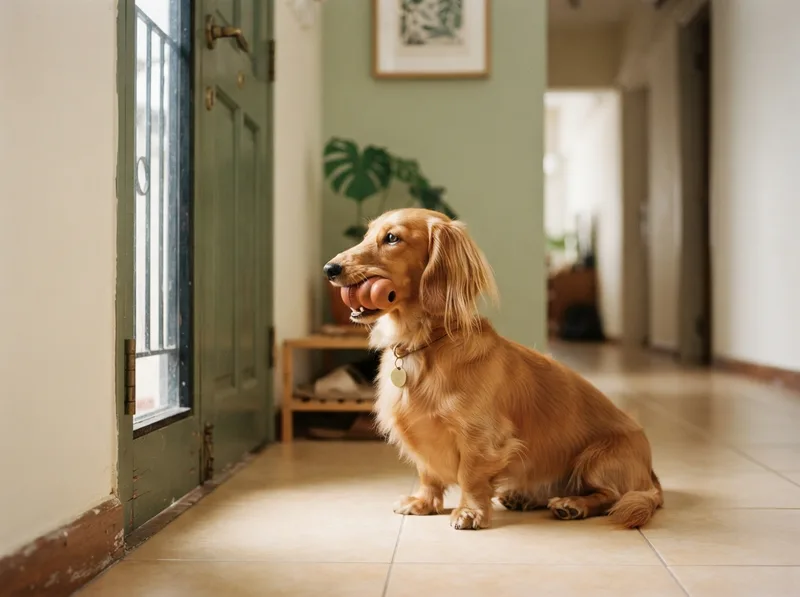
How do I handle Dachshund separation anxiety?
Prevent it with the alone-time ladder from week one: tiny in-flat absences, then boring door departures of five, fifteen and thirty minutes, stretching to part-days over months, stepping down at any distress. Repair it by camera-diagnosing boredom versus distress, enriching or re-laddering accordingly, and escalating to a behaviourist at the honest thresholds: no fifteen-minute tolerance after real work, self-injury, or escalation.
Why this breed struggles alone, honestly
Dachshund separation anxiety is not a defect; it is the shadow side of the feature everyone buys the breed for. A velcro dog engineered for centuries of intense human partnership does not read your departure as neutral information: unprepared, it reads abandonment, and it broadcasts the review at bred-to-be-heard-underground volume, which in an HDB block means the neighbours grade your dog’s emotional state before you get home to.
The honest framing changes the strategy: alone time training builds a skill this breed does not ship with, not a default setting, and the households that never meet the problem are the ones that trained the skill before it was needed. Everything below runs in two modes accordingly: prevention (start at week one) and repair (start today).
The alone-time ladder, from week one
The prevention protocol is the absence ladder: departures built from trivially small to routinely normal, each rung boring, each return one of the calm departures and calm returns the method depends on. Rung one, week one at home: you step out of sight inside the flat for one to two minutes while the puppy works a lick mat in its pen, and return before any protest, as covered in the first-week guide. Rungs two to four, weeks two to six: out the actual front door for five, then fifteen, then thirty minutes, always with the departure treat, always returning like nothing happened.
Rungs five and up: an hour, a lunch, a half day, stretched over the first months alongside the vaccination-and-socialisation calendar. Two rules carry the whole ladder: departure cues stay boring (farewell speeches teach that leaving is a big deal; low-key returns teach that absence was survivable), and a rung that produces distress means step back down, not push through. The ladder is not linear time; it is linear confidence.
The ladder, condensed
- Week 1: out of sight in-flat, 1-2 min, return pre-protest
- Weeks 2-6: door absences of 5, 15, 30 minutes
- Months 2-4: hour, lunch, half-day rungs
- Departures boring, returns boring, always
- Distress at a rung: step down, never push through
The camera diagnostic: distress or boredom?
Repair mode starts with camera monitoring, because the boredom vs anxiety question needs footage: the two conditions that wreck flats in your absence take opposite prescriptions. Boredom looks like: a settled dog that naps most of your absence, then works one destructive behaviour project (excavated cushion, unrolled toilet paper) with relaxed body language and no distress barking marathon. Distress looks like: pacing loops, sustained howling or barking that starts within minutes of the door, drooling, door-scratching, and no meaningful rest across the absence.
Boredom gets the enrichment toys payroll: nose-work breakfast, frozen kong departures, the rotation from the play guide, plus a harder look at exercise timing. Distress gets the ladder rebuilt from a lower rung plus the professional thresholds below. Mixed pictures are common and start with the boredom fixes, because a tired, project-equipped dog gives the cleanest second reading. What neither condition gets: punishment on return, which connects your arrival, the one good part of the dog’s afternoon, to fear.
Reading the footage
- Naps + one relaxed project = boredom: enrich harder
- Pacing, early sustained vocals, no rest = distress: ladder + help
- Drooling and door damage = distress, unambiguous
- Never punish at return; it poisons the reunion
The WFH trap and other modern installers
The pandemic wrote a new chapter in this file: dogs raised by work-from-home owners with zero absence practice, meeting their first real alone-time at age two when the office recalled its humans. WFH households need the ladder MORE, not less: schedule artificial absences from week one, out the door, coffee walk, back, even when you have nowhere to be, because the dog cannot tell a sabbatical from a permanent arrangement.
The other quiet installers worth naming: retirees planning travel later (same fix: practice absences now), households that carry the puppy everywhere in month one then change policy abruptly, and the well-meant mistake from the one-or-two guide: adding a second dog as company, which typically produces synchronised distress rather than mutual comfort. Absence competence transfers between contexts; company does not substitute for it.
Daycare, sitters and when to call a professional
Support options, honestly ranked for this breed. The daycare option suits sociable Dachshunds in genuinely long-day households: vet the operator for small-dog groups and back-aware handling (no bouncy-castle furniture), and note that daycare manages absence rather than training it; keep ladder days in the week. Sitters and midday walkers split long days usefully for the many Dachshunds who prefer their own flat to a social scene. The care line, for our buyers, is the free first consult on any of it.
Professional thresholds, stated plainly: a dog that cannot manage fifteen minutes after honest weeks of laddering, self-injury or escape attempts (bent bars, broken teeth on doors), or distress escalating despite good work, is past the blog stage and deserves behaviourist help from a qualified professional, possibly alongside vet support, since anxiety medication legitimately buys the calm in which training can finally land. That is not failure; it is the same triage logic as the IVDD pillar’s: home management has a ceiling, and knowing where it is protects the dog. The full behavioural context lives in the training pillar, and the honest prognosis is good: this breed loves company too much to fail at learning that company reliably returns.
This breed loves company too much to fail at learning that company reliably returns.
Frequently asked questions
How long can a Dachshund be left alone?
A ladder-trained adult manages a standard part-day (four to six hours) with enrichment and a midday break on longer days. Untrained, the honest answer is minutes, loudly, which is why the ladder starts week one.
Is my dog anxious or just bored?
A camera settles it: napping plus one relaxed destruction project reads boredom (enrich harder); pacing, early sustained vocals, drooling and no rest read distress (rebuild the ladder, consider help).
How do I build alone-time from week one?
The ladder: in-flat out-of-sight minutes with a lick mat, then door absences of five, fifteen and thirty minutes across weeks, boring departures and returns throughout, stepping down at any distress.
Why did WFH make it worse?
Zero absence practice: the dog met real alone-time for the first time at office recall. WFH households need scheduled artificial absences precisely because natural ones never happen.
Does a second dog fix it?
Usually not: breed-body advice and our care line agree that distress duets outperform solos. Absence competence is trained, not outsourced to a companion.
When do we need a behaviourist?
Fifteen minutes still impossible after honest laddering, any self-injury or escape damage, or escalation despite good work. A qualified behaviourist, sometimes with vet support, is the correct next rung.
Meet your Dachshund
Come say hello at Balestier
2 Balestier Road #01-701, Singapore 320002 · Weekdays 12pm–6pm · Weekends 10am–6pm. Or message us first: tell us about your home and routine, and we'll tell you honestly if a Dachshund fits.