Coats and climate · Measured, not vague
Do Dachshunds Shed? Honestly, Yes
Every breed page mumbles 'moderate shedder' and moves on. Here is what dachshund shedding actually means for your sofa, your black clothes and your robot vacuum, coat by coat, plus the tropical moulting calendar nobody admits exists.
Nelson and Kim, Curious Tails · AVS licence AS24J00046
Do Dachshunds shed a lot?
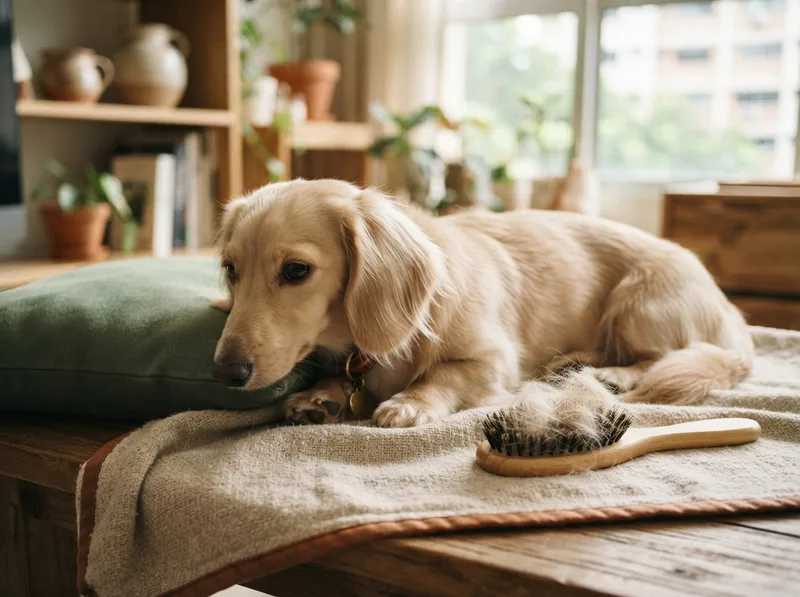
Moderately, in three different styles: smooth coats shed short quills that weave into fabric, long coats drop visible strands that gather into easy tumbleweeds, and stripped wire coats shed least. Expect two heavier moulting fortnights a year even in Singapore, manage it with brush cadence plus a robot vacuum, and know that no coat, on any dog, is truly hypoallergenic.
Shedding by coat, in household terms
Skip the vague "moderate shedder" label and measure dachshund shedding where it actually registers: your furniture, your clothes, your floors. The smooth coat hairs are short, stiff quills that weave INTO fabric: sofa cushions, car seats, and the black-clothes tax paid at the lint roller. Individually invisible, collectively upholstered. The long haired tumbleweeds are the opposite style: soft, visible strands that drift to skirting boards and gather in corners: more dramatic to look at, far easier to actually collect.
The wire stripped coat sheds least of the three, one of its quiet virtues, though the stripping itself is a bulk hair event by appointment. Net ranking for the average flat: long-haired is the most visible, smooth is the most persistent, wire is the least of either, and none of the three approaches the undercoat blizzards of the double-coated breeds; a corgi owner would call all three of ours tidy.
| Smooth | Long-haired | Wire (stripped) | |
|---|---|---|---|
| Volume | Moderate | Moderate | Lowest |
| Visibility | Low (until laundry) | High, gatherable | Low |
| Sticks to fabric | Champion level | Mildly | Barely |
| Floor evidence | Fine dust of quills | Corner tumbleweeds | Minimal |
| Management | Weekly mitt + lint roller | Brush cadence + vacuum | Stripping schedule |
Yes, the tropics have shedding seasons
The seasonal shedding question gets a lazy "no seasons in Singapore" answer that owners know is wrong. Indoor dogs under artificial light and aircon still run coat cycles, just less punctually than temperate dogs: expect two heavier moulting windows a year, a fortnight or so each, often loosely tracking the monsoon transitions, when the brush comes away noticeably fuller and the tumbleweeds unionise.
The response is cadence, not alarm: daily brushing through the fortnight captures the moult at the brush instead of the floor, baths mid-moult accelerate the release usefully, and then the coat settles back to its baseline. Mark the pattern in your calendar the first year; your dog runs its own schedule, and knowing it turns the surprise into a routine.
The allergy conversation, honestly
Shedding pages attract allergy sufferers, so the honest chemistry of dander allergy: reactions target dander, saliva and urine proteins, not hair itself, which makes the hypoallergenic myth a marketing category rather than a medical one. No Dachshund coat is hypoallergenic, including the low-shedding wire, because the dander ships regardless of hair length.
What actually helps allergy-adjacent households: spend real time with the specific dog before committing (individual dander loads vary), keep the bedroom dog-free as a clean-air room, run a HEPA filter where the dog lives, wash hands after heavy cuddles, and keep the brushing outdoors or in the service yard. Mild sensitivities often coexist happily with the breed under that regime; genuine allergies deserve a doctor’s advice before any deposit, ours included.
When shedding is a symptom instead
- Bald patches or thinning to visible skin: vet, not vacuum
- Itching, redness or odour alongside hair loss: skin round
- Sudden heavy loss outside moult windows: stress or medical
- Symmetrical thinning on flanks: hormonal workup territory
The management stack, ranked by payoff
Ranked by effort-to-effect, the anti-hair arsenal: first, the brush cadence, because hair captured at the brush never tours the flat; the routines per coat live in the grooming guide. Second, the robot vacuum, the single best appliance-per-dollar in a shedding household, run daily on a schedule; dedicated deshedding tools rank far below it for these single coats. Third, the diet and coat link: a decent food with adequate omega fatty acids grows coat that holds better; if the coat is dull AND shedding heavily, upgrade the bowl before the gadgets.
Fourth and below: washable sofa covers on the dog’s licensed furniture, a proper lint roller station by the door, and acceptance, the cheapest tool of all. A Dachshund household runs a background hair economy forever; the stack above keeps it at rounding-error levels, and the dog at the centre of it remains, by unanimous household vote, worth every quill.
Special cases: puppies, seniors, sterilisation
Three lifecycle notes finish the picture. Puppy coat change: between roughly four and eight months the puppy fluff gives way to the adult coat, with a scruffy, sheddier transition that worries first-time owners and means nothing; long coats look particularly gawky mid-change. Post-sterilisation: some dogs, especially long-haired, grow a softer, denser coat afterwards that sheds a touch more and mats a touch easier; adjust the brush cadence, not your expectations.
Seniors: coats thin and dull gradually with age, which is normal, but senior-onset heavy shedding or patchiness earns a vet check under the red-flag list above, since thyroid and other treatable conditions like to announce themselves through the coat. At every life stage the rule is the same one from the health hub: the coat is a gauge on the dog’s dashboard, and reading it weekly at brush time is free diagnostics.
Frequently asked questions
Do Dachshunds shed a lot?
Moderately, honestly: smooth coats weave quills into fabric, long coats drop visible gatherable strands, stripped wire coats shed least. None approach double-coated-breed blizzards.
Which coat sheds least?
A properly hand-stripped wire coat, then long-haired for ease of cleanup, with smooth the most persistent in fabric despite looking tidiest. All three are moderate.
Is there a shedding season in Singapore?
Yes: expect two heavier moulting fortnights a year even indoors, often around monsoon transitions. Daily brushing through the window captures it at the brush.
Are Dachshunds hypoallergenic?
No dog is: allergies respond to dander and saliva proteins, not hair length. Allergy-prone households should spend time with the specific dog first and keep a dog-free bedroom.
Why is my Dachshund suddenly shedding heavily?
Outside moult windows, excessive shedding says vet, not vacuum: sudden heavy loss suggests stress or a medical cause, and bald patches, itching or symmetrical thinning confirm the appointment.
Does diet affect the coat?
Visibly: adequate omega fatty acids grow coat that holds better and shines. A dull, heavy-shedding coat says upgrade the bowl before buying more gadgets.
Meet your Dachshund
Come say hello at Balestier
2 Balestier Road #01-701, Singapore 320002 · Weekdays 12pm–6pm · Weekends 10am–6pm. Or message us first: tell us about your home and routine, and we'll tell you honestly if a Dachshund fits.
The routines that catch the hair
Brushes, baths and the wet-dog protocol, coat by coat.
Grooming guide