Back-safe living · Guide 5 of 6
Back-Safe Play and Exercise for Dachshunds
A bored Dachshund is a demolition permit; an airborne one is a vet bill. The play repertoire between those fates is big, cheap and mostly powered by the nose. Here is back safe play in full: the banned list, the recipes, and the weekly schedule.
Nelson and Kim, Curious Tails · AVS licence AS24J00046
How do I exercise a Dachshund without risking the back?
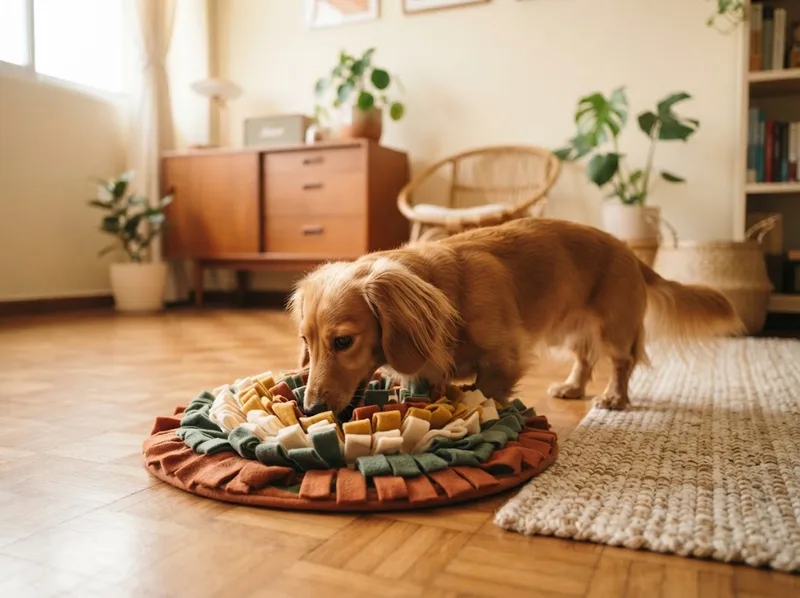
Keep everything low and nose-led: sniffy walks, scent games (find-it, snuffle mats, box searches), ground-level flirt pole and rolling fetch, plus swimming with a vest and ramp entry. Ban the airborne repertoire: leaping catches, frisbee, stair sprints. Ten minutes of serious sniffing tires this breed like an hour of walking, at zero spinal cost.
The banned list, with reasons
Start with the honesty: some classic dog games are simply wrong for this spine, and knowing why makes the bans stick. Leaping fetch, where the dog jumps to catch, lands twisting forces on calcified discs; ground-level fetch survives with rules below. Frisbee is leaping fetch with a sponsorship deal: banned outright. Stairs sprints and two-legged dancing for treats load the spine vertically; rough wrestling with big dogs adds torque from a party you cannot referee.
The pattern behind the list: jumping, twisting, and vertical posture are the three motions the long back hates, per the mechanics in the IVDD pillar. Everything that keeps four paws low and the spine level is negotiable; everything airborne is not.
Banned for the back
- Leaping catches: fetch is a ground game or no game
- Frisbee: airborne twisting, the classic disc injury
- Stair sprints and beg-dancing: vertical spine loading
- Wrestling with much larger dogs: unrefereeable torque
Nose work: the exercise cheat code
Here is the happy physics of dachshund exercise needs: the nose tires the dog faster than the legs do, and nose work games are zero-impact mental stimulation by design. Ten minutes of serious sniffing fatigues a scent hound like an hour of walking, which makes scent games the highest-value, lowest-risk entertainment this breed can be offered.
The starter recipes, all built from household items. Find it: treats tossed into grass or a towel, cue word, release; the foundation of everything. The muffin tin game: treats under tennis balls in a muffin tray, problem-solving included. The cardboard box search: one treat hidden in a room of empty delivery boxes, which Singapore households restock weekly for free. The towel burrito: kibble rolled into a towel for unrolling, feeding the burrowing instinct legally. A snuffle mat turns every dinner into a fifteen-minute hunt, stationary puzzle feeders make the bowl itself a project, and a scatter-fed meal on the grass downstairs is the budget version of everything above.
The nose-work starter kit
- Find it: the foundation cue, taught in one evening
- Muffin tin + tennis balls: instant puzzle
- Cardboard box search: free, restocked weekly
- Towel burrito: burrowing with a payout
- Snuffle mat dinners: 15 minutes per meal, forever
Flirt pole, tug and fetch: the technique versions
Three beloved games survive as no jumping games through technique, the fetch alternatives family. The flirt pole, a lure on a rope on a stick, is superb prey-drive exercise IF the lure stays on the ground: dragged in curves and straightaways, never lifted, so the chase stays flat and the pounce lands level. Ten minutes, twice a week, with wins allowed (let the catch happen or the game becomes frustration).
Tug survives under tug rules at a low angle: toy held at the dog’s shoulder height, pulled horizontally, no lifting the front end off the floor, and a drop cue that gets paid. Fetch survives as a rolling game: balls rolled rather than thrown, on grass rather than tile, chase and return with all paws grounded. The common thread is your hands keeping the geometry flat; the dog would happily go airborne, which is precisely why the human holds the toy.
Swimming, the tropics bonus
Swimming for dogs is the rehab world’s favourite exercise for good reason: real cardio and core work with the spine floated weightless, and Singapore is unusually well-equipped for it. Dog pools Singapore options span dedicated facilities with proper ramps and flotation vests, selected dog-friendly beach stretches (Sentosa’s Tanjong Beach area is the community favourite), and hydrotherapy at rehab clinics for dogs that need the clinical version.
The rules that keep it back-safe: a canine flotation vest for beginners (this is not a natural water breed and the long body swims tail-low), ramp entries rather than jumping in, sessions short (ten to fifteen minutes tires a mini thoroughly), and a proper undercarriage dry afterwards, especially on long coats, because damp feathering mats. A weekly swim plus daily nose work is, honestly, a better fitness programme than most humans in the flat are running.
The weekly play schedule that works
Structure beats spontaneity for the same reason it does in the enrichment world: a scheduled drain of energy prevents freelance projects. The template our aftercare notes suggest: two sniffy walkies daily as the base (the walks themselves are core-strength training on varied surfaces), one nose-work game daily rotating through the recipes above, flirt pole or rolling fetch twice weekly, and the swim or a long park sniff on weekends.
That schedule funds a tired, lean, muscled Dachshund, and each element reinforces the others: the muscle braces the spine, the fatigue lowers the barking, and the weight management guide gets an ally on the calorie side. Rainy weeks lean harder on the indoor recipes; the box search and towel burrito were built for the monsoon. Play, in this breed, is not a luxury around the health plan. It is the health plan wearing a toy.
Frequently asked questions
How much exercise does a Dachshund need daily?
Two decent sniffy walks plus a nose-work session covers a Miniature well: moderate mileage, maximum sniffing. The nose tires this breed faster than the legs, which is convenient for the spine.
What games are bad for the back?
Anything airborne or vertical: leaping catches, frisbee, stair sprints, beg-dancing, and wrestling with much larger dogs. Jumping, twisting and vertical posture are the three motions to design out.
What are good indoor games for HDB flats?
The nose-work kit: find it, the muffin tin game, cardboard box searches, towel burritos and snuffle-mat meals. All zero-impact, all built from household items, all monsoon-proof.
Is swimming good for Dachshunds?
Excellent: cardio and core work with the spine floated weightless. Use a flotation vest, ramp entries, short sessions, and dry the undercarriage properly afterwards.
How do I use a flirt pole safely?
Lure stays on the ground, always: dragged in curves, never lifted, with catches allowed. Ten minutes twice a week is plenty of prey-drive payroll.
Is fetch really a problem?
Thrown-and-leapt fetch, yes. Rolling fetch on grass, with all paws grounded through the chase, keeps the game and loses the airborne twist.
Meet your Dachshund
Come say hello at Balestier
2 Balestier Road #01-701, Singapore 320002 · Weekdays 12pm–6pm · Weekends 10am–6pm. Or message us first: tell us about your home and routine, and we'll tell you honestly if a Dachshund fits.
The instincts behind the games
Digging and prey drive, given legal jobs instead of your sofa.
Digging and prey drive