Back-safe living · Guide 4 of 6
Keeping Your Dachshund Lean
The single most protective thing you will ever do for a Dachshund's spine happens at the kitchen scale, nightly, against the most persuasive begging face in dogdom. Here is the whole method: checks, maths, and the counter-arguments to those eyes.
Nelson and Kim, Curious Tails · AVS licence AS24J00046
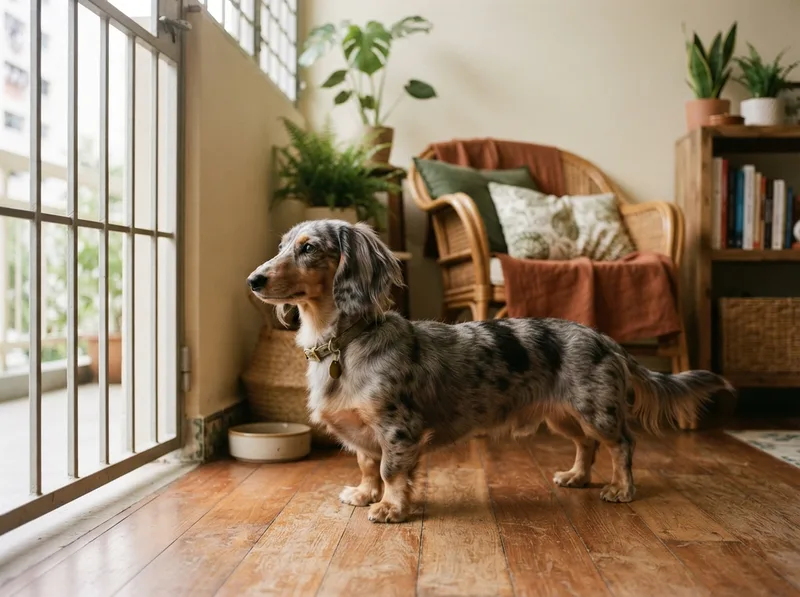
What is a healthy Dachshund weight?
Under 5kg for a Miniature and 9 to 12kg for a Standard, but condition beats numbers: ribs you can feel under light pressure, a visible waist from above, and a belly line that rises toward the hips. Weight is the biggest owner-controlled factor in the breed’s back disease risk; keep the treat budget under 10 percent of calories and check condition monthly by hand.
The body condition check that beats the scale
The scale gives you a number; the body condition score gives you the truth, and for a long low silhouette the standard chart needs translating. Three checks, hands on, monthly. The rib check: flat palms on the ribcage, light pressure; ribs should feel like the back of your knuckles, findable without excavation. The waist visible check: from above, a clear tuck between ribcage and hips, which on this breed reads as a subtle hourglass rather than a supermodel curve. The profile check: from the side, the belly line rises from chest to hindquarters instead of sagging parallel to the floor.
The ideal weight numbers frame the checks rather than replace them: a Miniature under 5kg, a Standard 9 to 12kg, but a muscular 5.2kg mini can be leaner than a soft 4.6kg one. Hands beat digits, which is convenient, because this breed considers being handled a form of payment anyway.
The monthly hands-on check
- Ribs: findable under light pressure, not buried
- Waist: visible tuck from above
- Profile: belly rises toward the hips, no sag
- Scale: same day monthly, trend beats number
- Fails any check: portions down 10%, recheck in 4 weeks
Why lean matters double for this spine
Every dog pays for an overweight dachshund lifestyle in the usual currencies: joints, heart, heat tolerance, anaesthesia risk, years. This breed pays twice, because extra load rides directly on discs the cartilage gene has already compromised. The veterinary shorthand: obesity is the single biggest owner-controlled risk factor for the back disease covered in the IVDD pillar, and unlike genetics, it is entirely yours to run.
The weight and ivdd arithmetic is unforgiving in both directions, which is the good news too: a lean Dachshund is not just less likely to face an episode, it recovers better if one comes, handles Singapore heat better on every walk, and typically adds quality years at the far end. No supplement on the market compounds like a waistline.
No supplement on the market compounds like a waistline.
Portion control vs the pleading face
Now the hard part: this is a food obsessed breed with theatre training, and the begging face has ended stronger diets than yours. The defence is arithmetic done in advance. Feed by grams, not scoops: weigh the daily kibble once, find the line on a measuring cup, and the calorie needs question becomes a settled fact instead of a nightly negotiation.
Then run the 10 percent treat rule: treats, chews and training rewards together stay under a tenth of daily calories, and the practical version is to deduct them from the bowl rather than adding them to the day. Training-heavy weeks: set aside part of breakfast kibble as the training pouch. Guests and children get briefed, because the secret-feeding grandparent is the most common leak in every diet we have ever helped fix, and the dog will absolutely maintain the conspiracy.
Low-calorie swaps keep the ritual without the maths damage: green beans, cucumber, watermelon in small amounts, and the time-honoured trick of catching thrown kibble one piece at a time, which this breed scores as a casino win regardless of denomination.
Slimming down an overweight Dachshund
If the hands-on checks failed, the weight loss plan is gradual by design: aim for roughly 1 to 2 percent of body weight per week, which for a 6kg mini means about 60 to 100 grams weekly, checked on the same scale at the same time of day. Faster crash-diets stress the body and, in this breed, tempt owners into exercise spikes the spine should not fund.
The method is three levers pulled gently: portions down about 10 percent, treats converted to the deducted-from-bowl system, and movement added as extra sniffy walk minutes rather than jumping games; a slow feeder or snuffle mat stretches the smaller meals into the same perceived feast. Plateau after honest weeks, or a dog gaining despite discipline, is a vet conversation, because thyroid and other medical causes exist and deserve ruling out. Many Singapore clinics run friendly weight clinics with free weigh-ins; use them as your referee.
The slim-down protocol
- Target: 1 to 2% of body weight per week, no faster
- Portions -10%; treats deducted from the bowl, never added
- Movement: more walk minutes, never more jumping
- Same scale, same time, weekly; trend is the truth
- No loss after 4 honest weeks: vet check for medical causes
The habits that make it permanent
Diets end; systems persist. The owners who keep dachshund weight in the green zone for a decade run three quiet routines: the monthly hands-on check anchored to the first Sunday, meals weighed once per bag change rather than eyeballed forever, and an annual calibration against the vet scale at booster time. Sterilisation, typically from seven months, nudges metabolism and is exactly when the measuring habit earns its keep.
And connect the loop to the rest of the back-safe system: a lean dog on back-safe play and steady walks builds the core muscle that braces the spine, while the ramps from the setup guide stop gravity taxing whatever weight exists. Waistline, muscle, mechanics: three legs of one stool, and this is the leg you control at the kitchen counter tonight.
Frequently asked questions
What should a Miniature Dachshund weigh?
Under about 5kg by Kennel Club standards, but the hands-on body condition checks beat the number: findable ribs, a visible waist from above, and a rising belly line from the side.
How do I tell if my Dachshund is overweight?
Run the three monthly checks: ribs buried under padding, no waist tuck from above, or a belly line sagging parallel to the floor all mean overweight, whatever the scale says.
Why does weight matter so much for the back?
Extra kilograms load discs the breed’s cartilage gene has already weakened, making weight the biggest owner-controlled IVDD risk factor. Lean dogs face fewer episodes and recover better from any that come.
How fast should an overweight dog slim down?
One to two percent of body weight weekly, via portions down 10 percent, treats deducted from the bowl, and more walking minutes. Crash diets and exercise spikes are both wrong for this spine.
How many treats are too many?
Keep all treats under 10 percent of daily calories, and deduct them from the bowl rather than adding them. On training-heavy weeks, use breakfast kibble as the training pouch.
What if the diet is not working?
After four honest weeks without movement on the scale, book a vet check: thyroid and other medical causes exist. Many clinics run weight clinics with free weigh-ins to referee the process.
Meet your Dachshund
Come say hello at Balestier
2 Balestier Road #01-701, Singapore 320002 · Weekdays 12pm–6pm · Weekends 10am–6pm. Or message us first: tell us about your home and routine, and we'll tell you honestly if a Dachshund fits.
Exercise without the jumps
Games that burn the calories this guide counts, without loading the discs.
Back-safe play guide