Back-safe living · Guide 6 of 6
Crate Rest and IVDD Recovery, Survived
Strict rest is the treatment that costs no surgery and all your willpower: six weeks of keeping a badger hound nearly motionless while it campaigns for parole. Here is the setup, the schedule, the emotional forecast, and the week-four trap that catches almost everyone.
Nelson and Kim, Curious Tails · AVS licence AS24J00046
How do I do crate rest properly for a Dachshund with IVDD?
A pen sized only for standing, turning and lying, traction-floored, in sight of the family; carried toilet trips on a two-hand, spine-level hold; brain-work through lick mats, frozen kongs and floor-level scent games; and four to six weeks of holding the line, including at week four, when the dog looks recovered but the disc is not. The vet’s recheck ends crate rest, never the tail wag.
The setup: build the recovery suite first
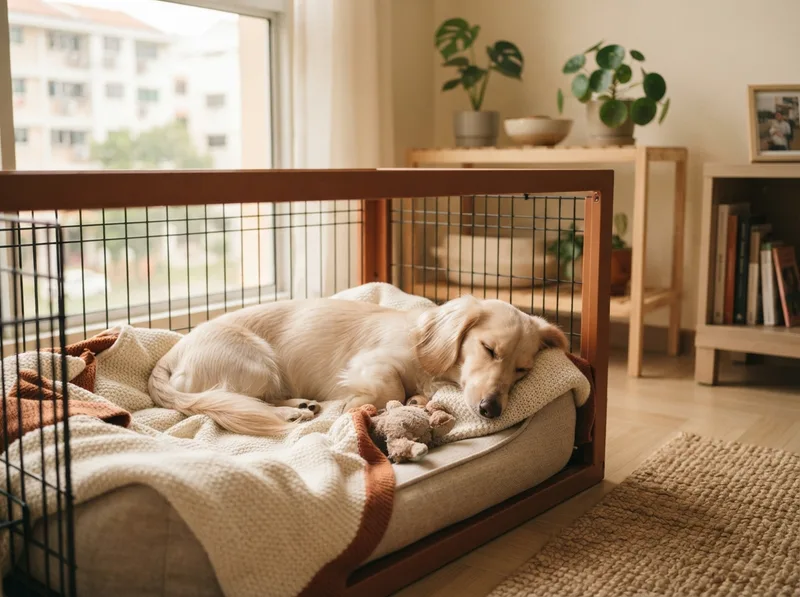
Strict rest fails in badly-built spaces, so spend the first hour on architecture. The recovery crate or pen is sized for standing, turning and lying flat, and no more: room to pace is room to re-injure. A wire pen often beats a closed crate for this breed because the dog can see its people, which halves the protest budget. Floor it with a traction mat so rising and lying are slip-free, fix the water bowl to the side so it cannot become a toy, and set the whole thing where household life is visible but doorbells and window theatre are not.
Position matters more than people expect: the conservative treatment weeks go easier when the pen sits in the living room by day, and many owners drag a mattress alongside for the first nights, which is not indulgence, it is noise management with a better view. Gather the kit before day one: lick mats, a couple of stuffable toys, the medication chart taped to the wall, and the vet’s recheck dates in the phone with alarms.
The recovery-suite checklist
- Pen sized to stand, turn, lie flat: nothing more
- Traction mat floor; fixed water bowl
- Sightline to people; no sightline to triggers
- Meds chart on the wall, recheck alarms in the phone
- Lick mats and stuffables stocked before day one
The toileting carry protocol
Toilet carries are the only outings, and they run on rails. The dog is carried, two hands, chest and hindquarters, spine level, to one boring toilet spot; set down on all four paws; business happens on a lead even in the flat’s service yard, because a post-pee zoomie is exactly the celebration a healing disc cannot afford; carried back the same way. No stairs, no sniff-tours, no exceptions, including the day it seems fine, which is a chapter of its own below.
Frequency follows the medication reality: dogs on anti-inflammatory and pain medication often drink more, so plan four to six carried trips daily rather than testing bladder heroics. If your own back objects to the lifting, a sling or beach towel under the belly assists the hindquarters on the walk to the spot; your vet can demonstrate the hold in thirty seconds at the first recheck.
Filling the brain when the legs are grounded
Six weeks of stillness with a working brain is the actual challenge, and enrichment in crate life is how conservative management stays humane. The safe list: lick mats (spread with wet food and frozen), stuffed and frozen kongs, snuffle boxes at floor level worked lying down, long-lasting chews sized to the dog, and the radio or television murmuring through your absences. Rotate items daily; novelty is the currency.
Equally important is the banned list, because well-meant entertainment can undo the rest: no tug, no toys that provoke pouncing, no laser dots, and no puzzle feeders that get batted around the pen. Training still works within stillness: calm scent games with treats hidden in a towel by the pen door, name games, and paid-for silence all spend mental energy at zero spinal cost. The pattern borrows from back-safe play: the nose is the only limb allowed at the gym.
The six-week emotional arc, forecast
Knowing the recovery timeline week by week is half the survival. Week one is protest: barking, theatrical sighing, night whining, and your resolve doing squats. Hold; it fades. Weeks two and three bring a strange calm as the routine becomes the world; this is the sweet spot, enjoy it. Week four is the trap, covered below. Weeks five and six are negotiation with a visibly brighter dog, which is exactly when the recheck schedule, not your optimism, makes the calls.
Somewhere in the arc most owners hit the guilt wall: the conviction that the confinement is cruelty. Write the counter-argument where you can see it: crate rest is how disc material heals without surgery, most milder cases recover fully this way, and six boring weeks buy years of working legs. The dog is not sad; the dog is inconvenienced, medicated, and healing.
The dog is not sad; the dog is inconvenienced, medicated, and healing.
The week-four false recovery, named loudly
Around week four, most conservatively-managed Dachshunds look recovered: bright eyes, steady walk to the toilet spot, opinions restored. This is the false recovery, and ending rest here is the classic relapse story, because pain resolves weeks before disc material stabilises. The tail wag is the anaesthetic wearing off, not the engineering report.
The rule that survives this moment: the recheck ends crate rest, never the vibe. Your vet clears progression stages, typically pen-plus-short-lead-walks before real freedom, and the graduated return to walks matters as much as the rest did: five-minute lead walks on flat ground, growing weekly, no furniture or stairs until specifically cleared, with the ramps and rules from the back-safe setup guide waiting as the permanent world it returns to.
Mid-rest red flags: call the vet today
- Pain returning: yelping, shivering, hunching
- Wobble, knuckling or dragging appearing or worsening
- Toilet control lost
- Refusing food or water beyond a day
After the six weeks: rehab and the new normal
Graduation is a downshift, not a finish line. Ask about structured rehabilitation: hydrotherapy and physiotherapy rebuild the muscle that six still weeks dissolved, and Singapore has proper facilities for it, with programmes insurers frequently recognise. The muscle matters, because core strength is the spine’s only in-house support staff.
And the flat the dog returns to should be the upgraded one: ramps trained, rugs down, jumping retired, weight watched with new religion. Many owners report the strange gift of the episode: the household that survives crate rest runs the back-safe system effortlessly forever after, because the alternative stopped being theoretical. The full context, from the 1-in-4 figure to treatment costs, lives in the IVDD pillar; this guide is the chapter you needed today, and the care line answers the questions between rechecks.
Frequently asked questions
How long is crate rest for IVDD?
Typically four to six weeks of strict confinement for conservative cases, with the exact span and the progression stages set by your vet’s rechecks, never by how recovered the dog looks.
What size should the recovery crate be?
Stand, turn, lie flat: no more. Room to pace is room to re-injure. A wire pen with a sightline to the family usually beats a closed crate for this people-oriented breed.
How does the dog toilet during rest?
Carried trips only: two hands, spine level, to one boring spot, on lead, four to six times daily, then carried back. No stairs, no sniff-tours, no post-pee zoomies.
My dog cries all night: is this normal?
Week one, yes: protest is standard and fades as routine takes over. A mattress beside the pen for the first nights manages the noise without ending the rest.
It seems fine at week four: can we stop early?
No: this is the false recovery. Pain resolves weeks before the disc stabilises, and early freedom is the classic relapse. The recheck ends crate rest, never the tail wag.
Is rehab worth it afterwards?
Strongly yes: hydrotherapy and physio rebuild the core muscle that bracing the spine requires, and Singapore has proper facilities. Ask your vet for the referral at the final recheck.
Meet your Dachshund
Come say hello at Balestier
2 Balestier Road #01-701, Singapore 320002 · Weekdays 12pm–6pm · Weekends 10am–6pm. Or message us first: tell us about your home and routine, and we'll tell you honestly if a Dachshund fits.
The bigger picture
What IVDD is, the emergency signs, and treatment in Singapore, honestly told.
Read the IVDD pillar