Singapore life · The climate manual
Dachshunds in Singapore Heat
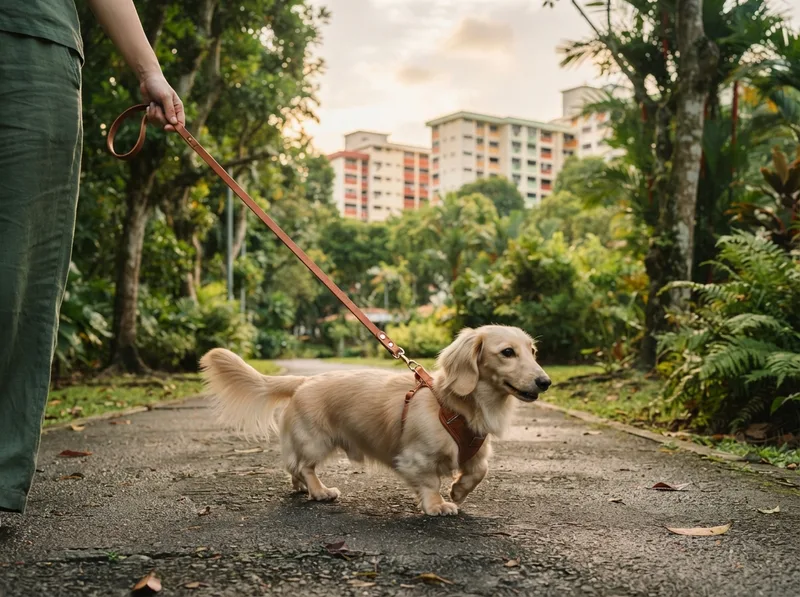
Ten centimetres of ground clearance changes the heat maths entirely: your Dachshund walks inside the radiant layer the pavement stores all day. Here are the walk windows, the 7-second test, and the heatstroke drill every low-dog household should know cold.
Nelson and Kim, Curious Tails · AVS licence AS24J00046
How do I keep a Dachshund safe in Singapore heat?
Respect the belly height: walk before 9am and after 6pm, run the 7-second back-of-hand pavement test on borderline surfaces, favour grass and shade routes, carry water past twenty minutes, and keep the weight lean, because overweight-plus-midday is the genuinely dangerous combination. Never shave the coat; it shields the low-riding belly from radiant heat.
The belly-height problem, explained
Most singapore heat dogs advice is written for average height; it misses what makes the low slung dog different: a Dachshund’s chest and belly travel ten-odd centimetres above the ground, inside the layer where pavements radiate their stored heat back out. On a sunny afternoon, tarmac that reads warm at your knee height is an oven at theirs, and the dog is effectively walking through the exhaust the whole route.
That radiant heat geometry, amplified by humidity that blunts panting’s efficiency, is why the breed’s heat rules run stricter than its size suggests, and why the surface itself, not just the air temperature, is the thing to test. The good news: unlike the flat-faced breeds, a Dachshund’s long muzzle is excellent cooling equipment, so with the timing and surface rules below, dachshund hot weather management is discipline rather than hardship.
The walk windows and the pavement test
The schedule that works year-round here: the main walks land before 9am and after 6pm, with the after-sunset slot preferred for the long one because pavements cool slower than air; a surface can stay oven-grade an hour after the sky goes soft. Midday outings shrink to shaded toilet errands on grass.
The referee for every borderline moment is the 7 second test: press the back of your hand onto the pavement and hold for seven seconds. If your hand objects, the route is closed at Dachshund altitude, whatever your sandals say. Grass over tarmac wherever the route allows, shade routes over exposed ones (Singapore’s park connectors are unusually generous with tree cover, use it), and hydration carried on any walk past twenty minutes, offered before the panting says please. Early morning walks own the freshest surfaces; evening walks own the longest ones.
The heat rulebook
- Walk windows: before 9am, after 6pm; sunset slot best
- The 7-second test: back of hand on pavement, every time
- Grass and shade routes beat tarmac marathons
- Water carried past 20 minutes, offered early
- Midday: shaded grass toilet errands only
Heatstroke: signs and the response drill
Dogs Singapore heat catches out show a recognisable ladder, and knowing it converts panic into procedure. Early heat stress: heavy panting that does not settle in shade, thick ropey drool, a tongue flattened wide like a spoon, and seeking ground contact with cool surfaces. Escalation: wobbling, glassy eyes, gums turning brick red, vomiting or collapse, and any of that second list is an emergency in progress.
The response drill, in order: move to shade or aircon, wet the body with tap-cool water (never ice, which shuts down surface vessels), concentrating on belly, armpits and paws, airflow from a fan, small drinks not forced gulps, and go to a vet even if the dog rallies, because heatstroke damages internals on a delay and the recovered-looking hour is famous for hiding it. Write your nearest aircon-hours vet and the 24-hour option inside the same cupboard door as the IVDD emergency numbers; low dogs share one emergency card.
Heatstroke response, in order
- Shade or aircon immediately; stop all activity
- Cool tap water on belly, armpits, paws; never ice
- Fan airflow; small sips, not forced drinking
- Vet regardless of apparent recovery; damage hides
Cooling kit: what works, what is theatre
The cooling aisle sorted honestly. Works: pressure-activated cooling mats (a favourite nap surface that genuinely sheds heat), damp-towel wipe-downs of belly and paws after warm outings, frozen kong sessions as indoor entertainment on furnace days, and the humble bowl of water in every room the dog uses. Situational: cooling vests help on necessary warm-hour walks but can trap heat once they dry, so they are equipment for managed outings, not a licence for midday marathons.
Theatre: shaving the coat, covered fully in the grooming guide; the coat is bidirectional insulation and belly-armour against radiant heat, and clipping it removes the shield at the exact altitude the breed needs it. Aircon dogs live well here: the cold room is the flat’s great equaliser and entirely fine for the breed; the dry-skin side effects are a grooming-visit conversation, not a reason to sweat the dog in solidarity.
Heat, weight and the exercise budget
The genuinely dangerous combination in this climate is not the coat or even the clock: it is weight plus midday enthusiasm. An overweight Dachshund carries its own insulation into the radiant layer, works harder for every metre, and cools worse at both ends of the process, which is why the heat file and the weight file are the same file in different folders.
On furnace weeks, trade outdoor minutes for indoor drains without guilt: the nose-work repertoire from back-safe play tires the dog at aircon temperatures, and a snuffle-mat dinner plus a box search equals a walk the pavement never taxed. Seniors and puppies run tighter margins in heat, per the health hub: shorter windows, more shade, lower thresholds for calling a day a rest day. The breed adapted to Singapore decades ago; the owners who thrive here simply adopted its opinion that dawn and dusk are the civilised hours.
Dawn and dusk are the civilised hours; the breed has always known.
Frequently asked questions
What time should I walk my dog in Singapore?
Before 9am and after 6pm, with the long walk after sunset when pavements have surrendered their stored heat. Midday shrinks to shaded grass toilet errands.
Why is pavement heat worse for Dachshunds?
The chest and belly travel centimetres above surfaces that radiate stored heat, so the dog walks inside the hot layer taller breeds stand above. The surface, not the air, is the hazard to test.
How do I do the pavement test?
Back of your hand pressed to the pavement for seven seconds. If it is uncomfortable for you, the route is closed at Dachshund height, however pleasant the breeze feels at yours.
What are the heatstroke signs?
Early: relentless panting, ropey drool, spoon-flat tongue, hunting cool floors. Emergency: wobbling, brick-red gums, glassy eyes, vomiting or collapse: cool with tap water and go to the vet regardless of rallying.
Do cooling mats and vests work?
Mats genuinely help as nap stations. Vests are situational kit for necessary warm-hour outings, useful while damp, heat-trapping once dry. Neither licenses midday marathons.
Is the long coat hotter in this climate?
No: the coat insulates in both directions and shields the low-riding belly from radiant heat. Never shave for heat; manage the clock and the surfaces instead.
Meet your Dachshund
Come say hello at Balestier
2 Balestier Road #01-701, Singapore 320002 · Weekdays 12pm–6pm · Weekends 10am–6pm. Or message us first: tell us about your home and routine, and we'll tell you honestly if a Dachshund fits.
Indoor drains for furnace days
The nose-work repertoire that tires the hound at aircon temperatures.
Back-safe play guide