Back-safe living · Guide 2 of 6
Dog Ramps for Dachshunds That Actually Get Used
Half the ramps sold for Dachshunds are too short, and half the rest are never actually used by the dog. Here is the incline maths, the buying checklist, and the five-day training plan that turns the purchase into protection.
Nelson and Kim, Curious Tails · AVS licence AS24J00046
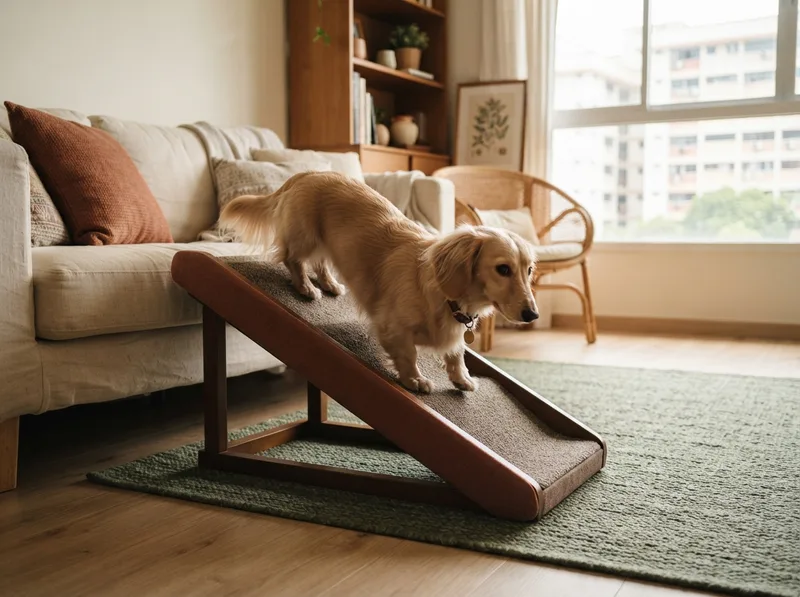
What ramp does a Dachshund need?
One about three times as long as the furniture is high (roughly 150cm for a 45cm sofa), giving an 18-to-20-degree incline, at least 30cm wide, with a carpet or grip-tape surface and zero wobble. Then five days of treat-trail training, starting flat on the floor, turns it from furniture into the dog’s preferred route.
The incline maths nobody prints
A dog ramp for dachshund use lives or dies on its ramp incline. The working rule from canine rehab practice: aim for an incline around 18 to 20 degrees, and treat 25 as the ceiling. Steeper, and the dog is effectively climbing, loading the very spine you bought the ramp to protect; many short "compact" ramps fail exactly here.
The maths is kitchen-friendly: ramp length should be roughly three times the height it serves. A 45cm Singapore sofa wants about 130 to 150cm of ramp; a 60cm bed wants 180cm, which is why a bed ramp is usually a bigger purchase than people expect, and why the "steps vs ramp" question below exists at all.
Ramp width matters second: 30cm is the comfortable minimum for an adult Miniature to walk without tightroping, and low side rails or a slight lip help the enthusiastic descender stay on the road.
18-20°
Target incline (25° ceiling)
3×
Ramp length vs furniture height
~150cm
Ramp for a 45cm sofa
30cm+
Comfortable width for a Mini
Ramp or steps: the honest verdict
Pet steps look tidier and fit smaller flats, and for many dogs they are fine. For this breed the ramp wins on mechanics: a ramp is one continuous, low-impact gradient, while steps are a series of small jumps, each landing a mini version of the exact force we are designing out. Rehab vets reach for ramps for spinal patients for precisely this reason.
Ramp alternatives earn their place in two situations: where floor space genuinely cannot host a proper ramp length (a 150cm footprint is real furniture), and for dogs that flatly refuse ramps after honest training. If you go steps, go deep and low: treads deep enough for all four paws, risers as short as the market sells, and non-slip surfaces on every tread.
Foam-block steps split the difference nicely for sofas: wide, low, stable, and soft to bail out on. What fails everywhere is the hard plastic mini-staircase with narrow treads: it is a wobble with a marketing budget.
Buying in Singapore: what to look for
Singapore pet stores, IKEA hacks and the usual platforms (Shopee, Lazada, Amazon SG) all serve; the checklist matters more than the store. Surface: carpet or grip-tape texture, never bare plastic or varnished wood, because a slipping ramp teaches a dog to fear ramps in one afternoon. Stability: it must not rock or skid under an excited descent; rubber feet or a non-slip mat underneath is standard practice.
Weight rating is rarely an issue for a 5kg Miniature, but build quality still shows in the hinges of folding models, which loosen into wobble over a year of daily use. If the ramp will live permanently at the sofa, a fixed one-piece beats a folder; folding models earn their keep for cars and travel. Budget guide: a decent sofa ramp lands in the low-to-mid double digits; the bed-height models cost more because length is the product.
The buying checklist
- Grippy surface: carpet or grip tape, never bare plastic
- No rock, no skid: rubber feet or matting beneath
- Length first: 3× the furniture height
- Fixed beats folding for permanent spots
- Low rails or lips help fast descenders
The 5-day training plan
Buying the ramp is the easy 20%; ramp training is the point, because a dog jumping off furniture next to an unused ramp is the standard failure mode, and usage is trained, not hoped for. The plan that works across our placements takes about five days of two-minute sessions.
Days one and two: ramp flat on the floor, treats scattered along it, the dog walking its length both ways until it is boring. Day three: raise it to a low box or the sofa’s footstool, treat trail up, treat trail down, praise the descent especially, since coming down is the part dogs rush. Day four: full sofa height, human alongside, lure with a treat held LOW to the ramp so the head stays down and the walk stays flat. Day five: fade the lure, reward at the bottom only, and start rewarding spontaneous ramp use whenever you spot it.
The two failure patterns are both human. Rushing to full height on day one teaches a scary wobble; and leaving jumping available teaches that the shortcut still pays. During training, block the jump route with a cushion barricade, and the ramp becomes the only road, briefly, until it becomes the preferred one, permanently.
If the ramp is refused
- Drop back a height level; refusal means too fast, not never
- Check the surface: paws slip once, dogs remember
- Feed meals on the flat ramp for a day to reset feelings
- Persisting refusal after honest weeks: try foam steps instead
Where ramps go, and when they can leave
Ramp placement runs in priority order for a typical flat: the sofa first, because it hosts the most daily jumps; the bed second if the dog sleeps up; the car third, where a folding ramp saves both spine and shoulder (yours). One well-trained ramp location generalises: dogs that ramp at the sofa learn the bed version in minutes; the wider flat setup lives in the back-safe setup guide.
Can the ramp ever leave? No, and reframing helps: the ramp is not a puppy aid, it is permanent architecture for a chondrodystrophic spine, as the the IVDD pillar explains. It will matter most twice in a lifetime: through the reckless young years, and again in the arthritic senior ones. In between it simply sits there, quietly winning, next to the back-safe play ideas that finish the job.
Frequently asked questions
What incline is right for a sofa ramp?
Around 18 to 20 degrees, with 25 as the ceiling. Practical version: ramp length about three times the furniture height, so a 45cm sofa wants roughly 150cm of ramp.
Ramp or steps: which is better for a Dachshund?
Ramp, on mechanics: one continuous low-impact gradient versus a series of small jumps. Steps are the fallback where space is short or a dog genuinely refuses ramps; choose deep treads and short risers.
Where do I buy a dog ramp in Singapore?
Pet chains and the major platforms all stock them; buy the checklist, not the brand: grippy surface, no wobble, correct length, and fixed rather than folding for a permanent sofa spot.
How do I train my Dachshund to use the ramp?
Five days of two-minute sessions: flat on the floor with treat trails, then low height, then full height with a low-held lure, then fade the lure and reward at the bottom. Block the jumping shortcut during training.
My Dachshund refuses the ramp: why?
Almost always speed or slip: the height jumped too fast, or a paw slipped once and the ramp got filed as dangerous. Drop a level, fix the surface, feed meals on the flat ramp, and rebuild.
Can the ramp go away once trained?
No. It is permanent spine architecture, not a puppy phase: most valuable in the reckless young years and the arthritic senior ones, and quietly useful every day between.
Meet your Dachshund
Come say hello at Balestier
2 Balestier Road #01-701, Singapore 320002 · Weekdays 12pm–6pm · Weekends 10am–6pm. Or message us first: tell us about your home and routine, and we'll tell you honestly if a Dachshund fits.
The whole flat, back-safe
Flooring, carrying technique and the room-by-room setup around the ramp.
Back-safe setup guide